Skin Parasites
Skin parasites (PAIR-uh-sites) are tiny organisms that invade the skin, often causing irritation and itching.
KEYWORDS
for searching the Internet and other reference sources
Chiggers
Lice
Mites
Nits
Pediculosis
Pediculus humanus capitis
Phthirus pubis
Pubic lice
Sarcoptes scabiel
Scabies
What Are Skin Parasites?
Parasites live off other living things (including people), often living, feeding, and reproducing on them. Some parasites thrive on human blood and cannot live long without it. 'When these parasites latch onto someone's skin, they may lay their eggs there. Before long, that person could become the host (an organism that provides another organism, such as a parasite or virus, with a place to live and grow) for hundreds or more of the parasites.
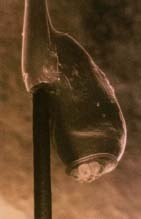
Skin parasites are found worldwide and infest large numbers of people. For example, as many as 6 to 12 million people worldwide contract head lice every year, according to the U.S. Centers for Disease Control and Prevention. Head lice most often affect children in school and daycare settings.
What Are Some Common Skin Parasites?
There are many parasites that infest human skin, but lice, scabies (SKAY-beez), and chiggers are among the most common.
Head lice
Also known as Pediculus humanus capitis (peh-DIH-kyoolus HYOO-mah-nus KAH-pih-tis), head lice are six-legged parasites with tiny claws that cling to hairs. They are found on the scalp, neck, and behind the ears. Lice lay visible, whitish eggs called nits. In about 7 days, the nits hatch into young called nymphs (NIMFS). Nymphs grow up fast, and in just 1 week they mature into adult lice that must feed on blood to stay alive. Head lice may not cause any symptoms immediately, but as with other insect bites the body reacts to the invaders, leading to itching and sores from scratching.
Pubic lice
Pubic lice, or Phthirus pubis (THEER-us PYOO-bus), invade the pubic hair and sometimes other body hair such as beards, eyebrows, eyelashes, and armpit hair. They often are called "crabs" because of their crab-like appearance. Pubic lice cause intense itching, especially at night, when they feed by burying their heads into hair follicles * . The nits or adult lice can be seen on pubic hairs or surrounding skin.
Scabies
Microscopic Sarcoptes scabiei (sar-KOP-teez SKAY-be-eye) mites cause an infestation called scabies. The mites work their way under the top layer of skin and lay their eggs. Most people are not even aware of the intruders until intense itching begins 2 to 6 weeks later. Red, pimple-like bumps appear on the skin, and there may be wavy lines on the skin tracing the mites' paths, especially in the webbing between the fingers and in the skin folds at the back of the knees and the inside of the elbows.
* hair follicles (FAH-lih-kulz) are the skin structures from hair develops and grows.
* hives are swollen, itchy patches on the skin.
Chiggers
Chiggers are mites that tend to live in weeds, tall grass, or wooded areas. The chigger larvae (LAR-vee, immature mites) feed on a variety of animals, including humans. The larvae crawl onto the skin of passersby and can use their tiny claws to grab onto human hair. They then attach to the skin, usually at the ankles or waist or in skin folds, with hooked mouthparts and feed on skin cells. Unlike lice and scabies, chiggers only feed on their host for a couple of days, then let go and fall off. Chigger bites can cause a red bump that continues to grow in size, a skin rash, hives * , and severe itchiness. Sometimes the larvae are visible in the center of the bump.
How Are Skin Parasites Spread?
Despite what many believe, people do not get skin parasites because of poor hygiene. Instead, skin parasites tend to spread in situations where they can walk or fall from one person to another (or in the case of chiggers, from vegetation to human skin). The parasites often require relatively prolonged and close contact to move between people, and they spread most easily in crowded conditions, from sharing personal items, and from skin-to-skin contact.
Head lice in particular fall easily onto their next victims in close quarters. They also can infest hairbrushes, barrettes, hats, and sometimes clothes or bed linens. If other people use these items, they can become infested as well. Pubic lice spread mostly through sexual contact, but people also can get them from bed linens and clothes.
Scabies spreads quickly in crowded living conditions or in places with lots of skin-to-skin contact (such as daycare centers and nursing homes). Like lice, scabies can be passed through sexual contact and by sharing clothes, towels, and bed linens.
Diagnosis and Treatment
Doctors often diagnose skin parasite infestations just by spotting the parasites, their eggs, larvae, or characteristic red bumps on the skin. With scabies, a skin scraping might be taken to check for mites, eggs, and mite feces (FEE-seez, or bowel movements). However, this test is not always accurate because the mites may have moved from the spot that was scraped.
Over-the-counter and prescription lotions and shampoos (known as pediculicides, peh-DIH-kyoo-lih-sides) can be used to kill head lice. In some cases, treatment may need to be repeated or replaced with stronger medications because lice are becoming resistant to some treatments. Other people living in the same house with the infested person may be treated at the same time.
Pubic lice also are treated with a pediculicide, similar to the treatment of head lice. If the infestation includes the eyelashes, petroleum jelly is applied several times a day to the eyelids for a week or more.
Patients with scabies are given medicated lotions to apply over the entire body, and the lotion must stay on for 8 to 12 hours. Chigger bites do not require any special treatment to heal, but antihistamines * may ease itching.
Infestation with lice and scabies can persist until they are treated properly. Once treatment begins, patients usually are no longer contagious after a day or two, but sores and itching may not disappear for a couple of weeks. Chigger bites heal quickly.
* antihistamines (an-tie-HIS-tuh-meens) are drugs used to combat allergic reactions and relieve itching.
* impetigo (im-pih-TEE-go) is a bacterial skin infection that usually occurs around the nose and mouth and causes itching and fluid-filled blisters that often burst and form yellowish crusts.
Can Skin Parasites Cause Medical
Complications?
Complications of skin parasites are rare. Frequent or rough scratching of bites or sores can lead to bacterial infections, such as impetigo * . If lice spread to eyebrows or eyelashes, the eyelids may become infected. Norwegian or crusted scabies is a form of scabies that can be severe in people with weak immune systems, such as those with a chronic * illness and elderly people.
How Can People Prevent Infestation with
Skin Parasites?
To avoid skin parasites, experts recommend that people:
- shower daily, wash hands frequently, and wear clean clothes
- avoid anyone who has lice or scabies until that person is treated
- never share brushes, hats, bed linens, or clothes
- practice abstinence (not having sex); birth control does not prevent pubic lice or scabies
- avoid chigger-infested areas and wear socks, long pants, and long sleeves in wooded or grassy areas
To prevent the spread of parasites in a home when a family member has been diagnosed with an infestation, it is wise to:
- wash bed linens, towels, and clothes in hot water, then dry them on high heat
- vacuum the entire house, then throw the vacuum cleaner bag away
- disinfect combs and hair items
- seal items that cannot be cleaned in airtight plastic bags for 2 weeks; at the end of that time, any parasites on those items will have died
In addition, children who have skin parasites should stay home from school or daycare until a day or two after they begin their treatment.
* chronic (KRAH-nik) means continuing for a long period of time.
See also
Skin and Soft Tissue Infections
Resources
Organization
U.S. Centers for Disease Control and Prevention (CDC), 1600 Clifton
Road, Atlanta, GA 30333. The CDC is the U.S. government authority for
information about infectious and other diseases. It posts fact sheets
about various parasitic infestations and diseases at its website.
Telephone 800-311-3435
http://www.cdc.gov
Website
KidsHealth.org
. KidsHealth is a website created by the medical experts of the Nemours
Foundation and is devoted to issues of children's health. It
contains articles on a variety of health topics, including lice,
scabies, and chiggers.
http://www.KidsHealth.org
up
Anyone else with helpful ideas?
Thanks,
Cheli
I am so glad I found you guys! I have the same thing - black 'bugs', some are sliver-like, white things stuck on my skin and they REALLY bite.
I just started my Ivermectin today. My doctor thought it was body lice. Is that what your doc thought? Please any info would help.
Thanks,
TJ
After the bath I tried to collect as many samples as I could of these teeny tiny little things. after the bath and after putting the slightly burning cream on things felt ok for a while. The sun went down and all the activity began again. They look like tiny little worms and they dig in and live under my skin (but they don't pay rent).. The adults just live under your skin and you need to dig them out of the reddish welt, When they lay their eggs, they seems to all come from the same place. I watched in the mirror as I pulled of many eggs form my face, arms, neck and legs, they are everywhere. in my ears, on my scalp. its constantly itcy and I am completely grossed out byt the fact the they exsist and are have a parasite burning man on my body. I have tried scratching the top of the sealed parent home and pulling them out, it leaves a big hole in its place. The babies seem to come from a doughnut looking home and they pop out one at a time for you to extend the enjoyment of first class nastiness.
I am going to try another bath of milk (lactic acid) and oatmeal for calming, adding some lavender ess oil to the mix. has anyone ever heard of this and what can I do to get rid of them, stop the itching etc???
HELP! please,
thanks in advance for taking the time to advise me.
My situation is so bad that I vomit up parasites daily. I have been to emergency four times and they tell me to stop wasting there time that I do not have a parasite. How they can say this when they refuse to test me in any way.My family Dr. of two years has visually seen them twice as I got tired of the test results saying I had nothing so on two different occasions I took a cake pan into him. First time he freaked saying go to emergency which, I refused as they had already denied me treatment so he ran and got another Doctor who then looked it the cake pan and said she has the flukes , that sample came back as a bacterial infection for both myself and son. The second time he quarantined the office room and demanded I never bring in another sample.Later I was refused to be seen by infectious disease and refused medication of any kind. I even tried to call and set up an appointment with infectious Disease and when I told them my name and my file popped up it must say that I have no parasite and that I am obsessed with the fact that I do. I was again refused treatment. I have called the College of Physicians to report this but, in order to do this I must name the Dr. I fear doing this as I also work in the Rehabilitation Field full time and part time as a Nurses Aid in a Nursing Home and the last thing I need is for word to get around that filed a legal complaint. I have been under the care of a Chinese Master Herbalist and the medication was good but did not cure me. I was then seeing a Tibetan Monk Dr. and his medication also helped but when I stopped taking it they came back and I now have them in my hair and hands to the point it has taken me a few hours to type this as my fingers are swelled up and sore as hell. Up until this past September I had shared my health issues with all my family, friends and Co Workers, I no longer do this. I had to step down from my Nursing Contract as the fear of passing the parasite on. I started in November a new Nursing Assistant contract as I thought I was clear from them, I am 100% positive I still have a parasite and I fear passing them on to someone at work but, without Proof of this from a Dr. I must go into work or get fired. I am tired ...tired of trying to find out what I have , tired of trying to get medical assistance , tired of being judged , tired of the pain the severe pain I get when they are in my feet and legs. I just Can't handle the pain and vomiting in which occurs daily. I also am afraid to go back to a Dr. as they may record negative information in my file due to the fact that they believe I have no parasite. I have been taking photos since a year ago April of my hands, feet, and stool when I can get a Dr. to look at them they say that can't be sure. If they don't believe me it is a parasite then why in world do they not try and find out what it is but, they do nothing so I quite seeing a Dr. I recently started the Avenda Parasite program and I am seeing toilet bowls of them coming out of me but, I am also have become more infested in different areas like my hair and fingers. I have an appointment tomorrow at a Naturopathic Clinic
in hopes they can cure me. I have recently started coughing and have two pictures of my vomited and what looks to me like black faced parasites with a white body. PLEASE can someone tell me where to go to get diagnosed and cured? I need to be diagnosed as my Foster Son who has Cerebral Palsy and my Grandson also have them but not at the level of infection in which I do. Without a diagnoses I can not them treated.
You gotta understand the bug in order to beat it. Shy of you stating this and that in your post, besides the monk and the china men what kinds of potions do they give you?
From an outsider's Point since I don't know what all you've tried or what all they've tried I'd start here. and this for me was the hardest cut all sugar out of your diet I did it for a solid week and I'm a candy Junkie. Substitute to sweets for honey ton of local raw honey also take wormwood, cloves, oregano, tons of garlic and start juicing raw liquid chooses pineapples lots of rooms bananas in my banana milkshake with my pineapples again no sugar no refined sugar no artificial sugar Shotokan all that out yourself you have to flush your inside out and make yourself as least tasty as possible because you are the host for the party and they will only hang out there while you let them. clean your house from top to bottom vacuum vacuum vacuum and wipe everything down these bugs can survive chlorine from what I understand so vacuum vacuum vacuum. Wash everything in super hot water and try everything on Isis don't put anything in your mouth since ever something touch base it's washed even if it's just a few minutes afterwards if you have any important that you don't put anything in your mouth. If you do just continued their life cycle. check back in a couple days trust me it's not fun or easy but it is manageable and it is doable. God bless